CASPer Test for Nursing School: The Complete 2026 Guide
More nursing programs add CASPer to their admissions every year, and it catches a lot of applicants off guard. If your target BSN, accelerated, or direct-entry program asks for it, this guide covers exactly what the test is, why nursing schools use it, and how to prepare so it works in your favor instead of against you.
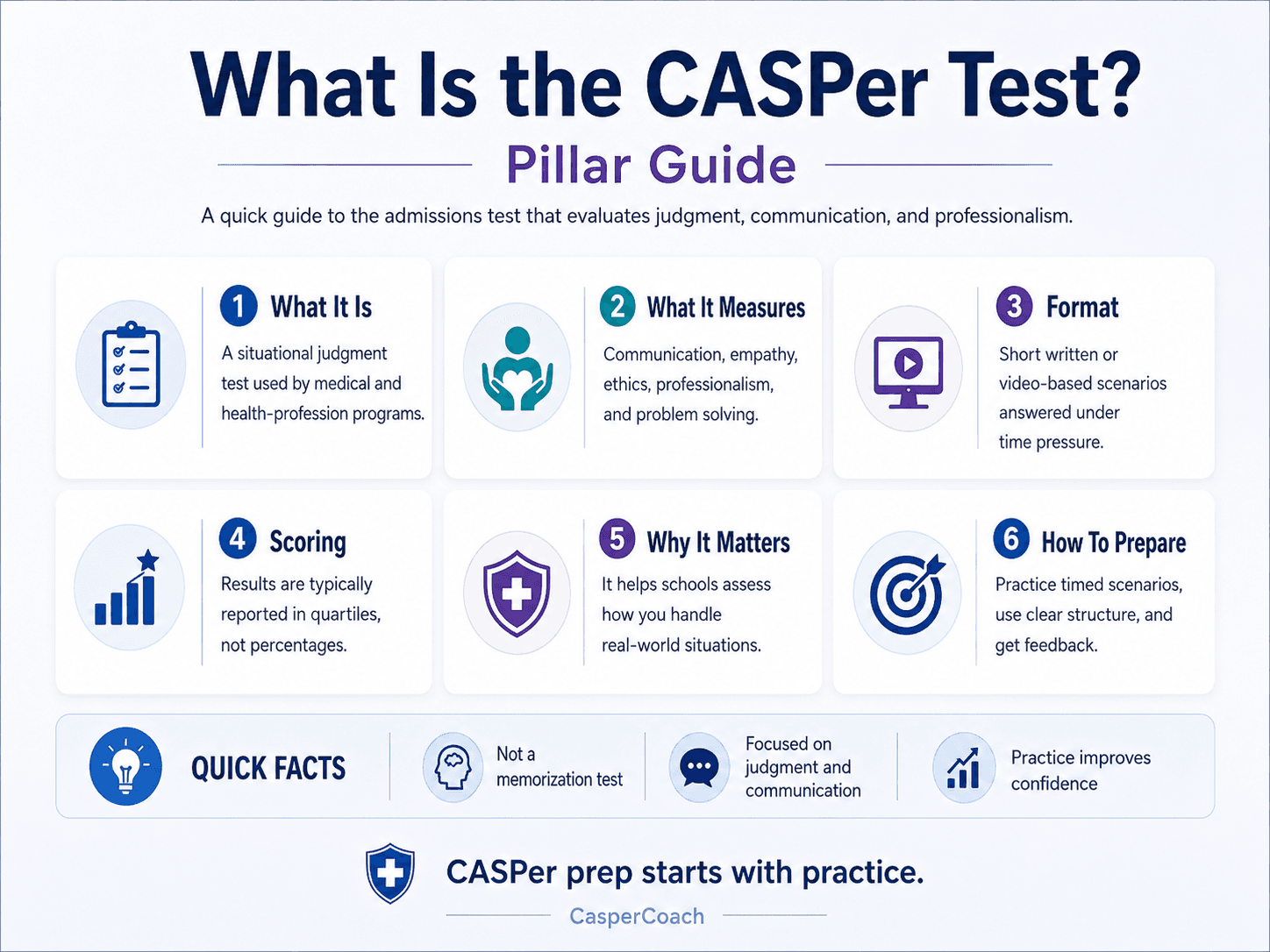
Why nursing schools use CASPer
Grades and a science prerequisite list tell a program whether you can handle the coursework. They say almost nothing about whether you can sit with a frightened patient, de-escalate a conflict on a busy unit, or speak up when something is unsafe. Those are the competencies that make or break a nurse, and they are exactly what CASPer is built to measure.
For admissions committees, CASPer is a standardized, hard-to-game way to compare applicants on people skills and ethical judgment. It levels the field for applicants who may not have polished interview coaching but do have genuine empathy and sound reasoning.
The competencies CASPer scores
• Collaboration
• Communication
• Empathy
• Equity
• Ethics
• Motivation
• Problem solving
• Professionalism
• Resilience
• Self-awareness
Which nursing programs require CASPer?
CASPer is most common among competitive and accelerated nursing routes, including many direct-entry BSN, accelerated second-degree BSN, and some entry-level master's programs. The exact list changes every cycle as schools add and drop the requirement, so the only reliable source is each program's own admissions page.
Nursing is not the only allied-health field adding CASPer. It now shows up in occupational and physical therapy admissions and even in teacher education programs, so if you are applying across more than one field, confirm each program's test code separately.
Before you register, confirm three things:
- Whether CASPer is required, recommended, or not used for your specific program.
- The exact test code your program reads (nursing codes differ from medicine codes).
- The deadline, since CASPer must be taken by a date that lets results reach the school in time.
What the test looks like for nursing applicants
The good news: you do not need any clinical knowledge. CASPer scenarios are everyday situations involving teamwork, fairness, and difficult conversations. You read or watch a short scenario, then answer a few probing questions under a tight timer, either by typing or recording a short spoken response.
A typical scenario might involve a coworker cutting corners, a friend asking you to keep a worrying secret, or a disagreement about how to split work. The test wants to see how you think, not what you know.
How nursing applicants can score in the top quartile
Nursing applicants actually have a natural advantage on CASPer if they use it. The empathy and patient-centered instincts that draw people to nursing are exactly what raters reward, as long as you pair them with structure and concrete action. Here is how:
Lead with the people, then act
Name everyone affected and what they need before you decide. Then give a clear, sequenced action. Empathy without action scores low; action without empathy reads cold.
Gather before you judge
Avoid snap verdicts. Say what information you would seek and who you would talk to first. This mirrors safe clinical practice.
Practice under the timer
The hardest part is producing a structured answer in a few minutes. The only fix is timed reps with feedback so the structure becomes automatic.
Practice CASPer scenarios built for nursing applicants
CasperCoach runs realistic timed scenarios, scores all 10 competencies, and shows your projected quartile after each answer. Start free, no card needed.
Frequently Asked Questions
Do nursing schools require the CASPer test?+
A growing number of nursing and BSN programs require or recommend CASPer, especially competitive direct-entry and accelerated programs. Requirements vary by school and change yearly, so always check each program's current admissions page for the exact test code.
What does CASPer measure for nursing applicants?+
CASPer assesses the same professional competencies nursing schools care about: communication, empathy, ethics, collaboration, professionalism, and judgment under pressure. These are the day-one skills of clinical practice, which is why programs use it alongside grades.
Is the nursing CASPer test different from the medical one?+
The format is the same: timed situational-judgment scenarios with typed and video responses. The test code differs by program type, so you must register for the specific CASPer your nursing program requires. The scenarios are general-audience and do not require clinical knowledge.
How should nursing applicants prepare for CASPer?+
Do timed practice scenarios, get feedback on each one, and drill a clear answer structure. Nursing applicants do especially well when they lean into empathy and patient-centered reasoning while still giving concrete, sequenced actions.